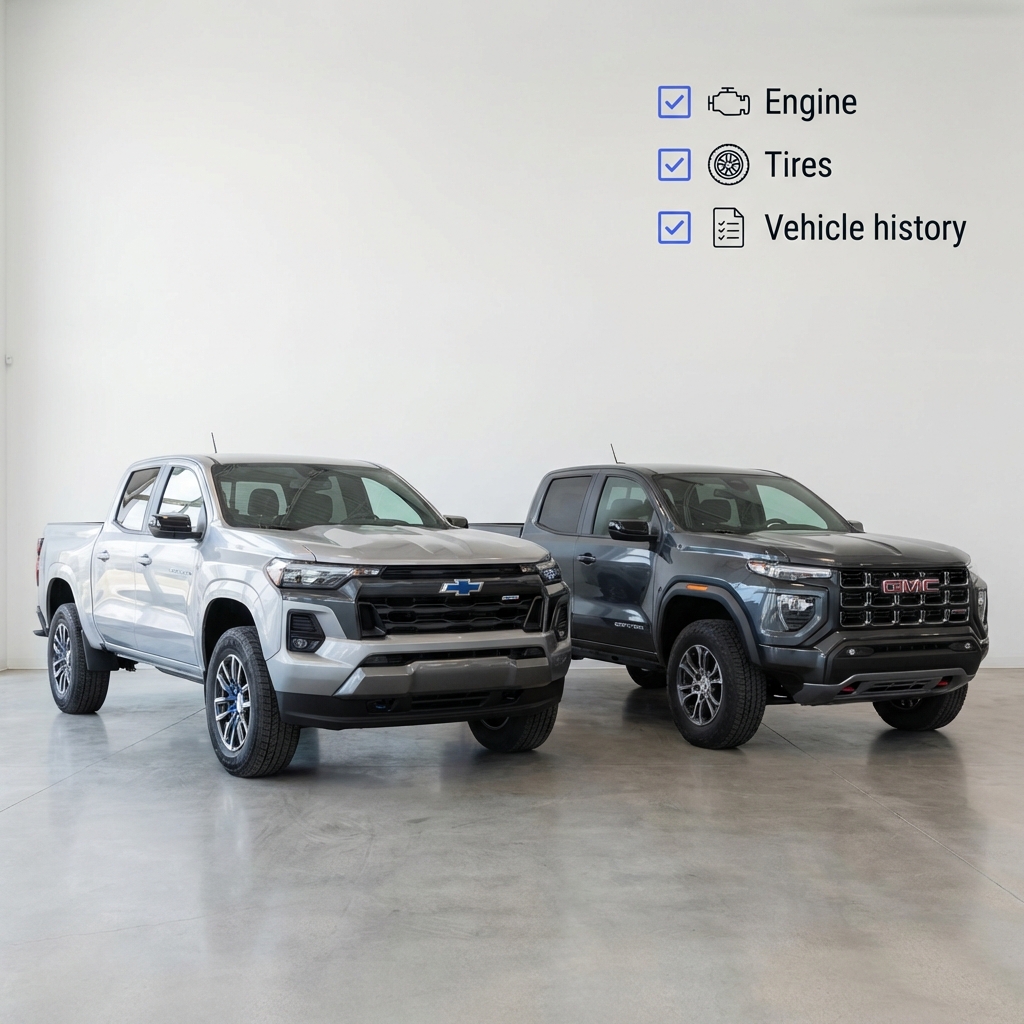
Quick answer: what this comparison means for used‑car buyers
Headline summary - gmc car dealer near me
If you are deciding between Chevrolet and GMC on a used listing, the short answer is that the two brands tend to show similar real-world longevity at the brand level. Recent industry dependability research finds comparable positions for Chevrolet and closely related GMC models, and platform sharing explains much of that overlap J.D. Power VDS.
That similarity does not mean every Chevy and GMC will age the same. Many GMC models are platform-shared rebadged siblings of Chevrolet models, so chassis, engines, and major components are often common across the two brands. When individual longevity matters, model year, powertrain, and maintenance history usually predict remaining life better than the brand badge alone Consumer Reports on Chevrolet.
This guide explains the kinds of evidence that matter, what studies actually show, and a practical checklist you can apply to each listing. It also shows example comparisons that put history reports and price context ahead of brand shortcuts.
What readers will learn in this article
Read on to learn how mileage cohorts, owner-complaint data, and industry dependability studies differ and how to combine those signals. You will get a step-by-step framework for checking a vehicle history report, comparing price analysis labels, and searching model-year complaints. The goal is to help you decide which specific Chevy or GMC listing is likelier to offer longer service life.
Throughout the article we use evidence from dependability studies, mileage-based longevity research, and aggregated complaint databases to show which checks give the most predictive signal for high-mileage survival.
How longevity is measured and what industry studies actually show
Types of longevity signals: mileage cohorts, owner complaints, dependability studies
Longevity can be measured in several ways. One common benchmark is the percentage of vehicles in a model family that reach 200,000 or more miles, a measure used in mileage-cohort analysis to highlight long-lived platforms iSeeCars analysis.
Another approach is industry dependability studies, which survey owners about problems per 100 vehicles and produce brand and model rankings. Those studies are helpful for broad patterns across many owners, but they may smooth over model-year spikes and component-specific clusters J.D. Power VDS.
Owner-complaint aggregations and component-failure reports give complementary detail by showing which parts fail most often and in which years. These sources highlight recurring issues such as transmission complaints or electrical faults that can shorten useful life if not addressed RepairPal reliability pages.

Mileage cohort studies are objective about long-term survival across large samples, but they do not always explain why a vehicle reached high mileage. Repairs, aftermarket changes, or heavy maintenance can be hidden behind a high-mileage count. Use mileage statistics as an indicator, not a guarantee.
Dependability studies are valuable for brand and model-level comparison across many owners, yet they are influenced by the mix of model years and owners surveyed. A model that had a problematic year can pull down averages even if later revisions fixed the issue.
Run a vehicle history report before you visit the dealer
When you see a listing with high mileage or few visible issues, run a vehicle history report to confirm ownership, title status, and major service events before relying on brand-level signals.
Owner-complaint databases are most useful for spotting component clusters to watch in a pre-purchase inspection. If a platform shows repeated transmission or fuel-system complaints for specific model years, those are the years where an inspection or a service-record review matters most Silverado complaints summary.
That mix of sources explains why no single study gives a complete answer. Combining mileage cohorts, owner reports, and dependability rankings gives a more complete risk picture for a given used listing.
Brand-level findings: what studies say about Chevrolet and GMC
Summary of recent dependability rankings
Recent 2024-2025 dependability studies place Chevrolet and GMC in comparable positions across many measures, reflecting the fact that many GMC models share platforms and components with Chevrolet counterparts Consumer Reports on Chevrolet. You can also see the 2025 U.S. Vehicle Dependability Study (VDS) findings here.
Does brand tell you how long a specific vehicle will last?
At the brand level, Chevrolet and GMC show similar longevity because many GMC models are platform-shared with Chevrolet counterparts; model year, maintenance history, and specific component records are more predictive for any given used vehicle.
Not reliably. Brand-level rankings can indicate broad differences across makers, but they are a weak predictor for a specific vehicle because they average many model years and trims. When two brands share engineering, such as Chevy and GMC on pickup and SUV platforms, the brand label often adds little new information beyond what the model and year already show J.D. Power VDS.
When brand-level comparisons are useful and when they mislead
Use brand-level comparisons to orient your search. If studies show a maker tends to have more problems in a class, treat that as a signal to be more careful. However, do not substitute brand reputation for model-year inspection and history checks.

Brand rankings mislead when you assume that all models under a badge behave the same. For example, full-size trucks may have stronger high-mileage records than compact cars across either brand. In those cases, vehicle class and platform history matter more than the badge itself iSeeCars long-mileage study.
A practical framework: how to judge a specific Chevy or GMC listing
Step 1: check the vehicle history report and ownership history
Start with a vehicle history report that shows title status, reported accidents, service records, and ownership history. A history report can reveal patterns such as repeated title changes, salvage or rebuilt titles, or gaps in service that raise risk. Use the report to confirm major service events listed by the seller Consumer Reports on Chevrolet.
Look for consistent service intervals, documented timing of major repairs, and any indicators of flood or frame damage. Single-owner cars with solid service documentation tend to be more predictable in long-term costs than cars with unclear histories.
Step 2: compare pricing and price analysis labels to local peers
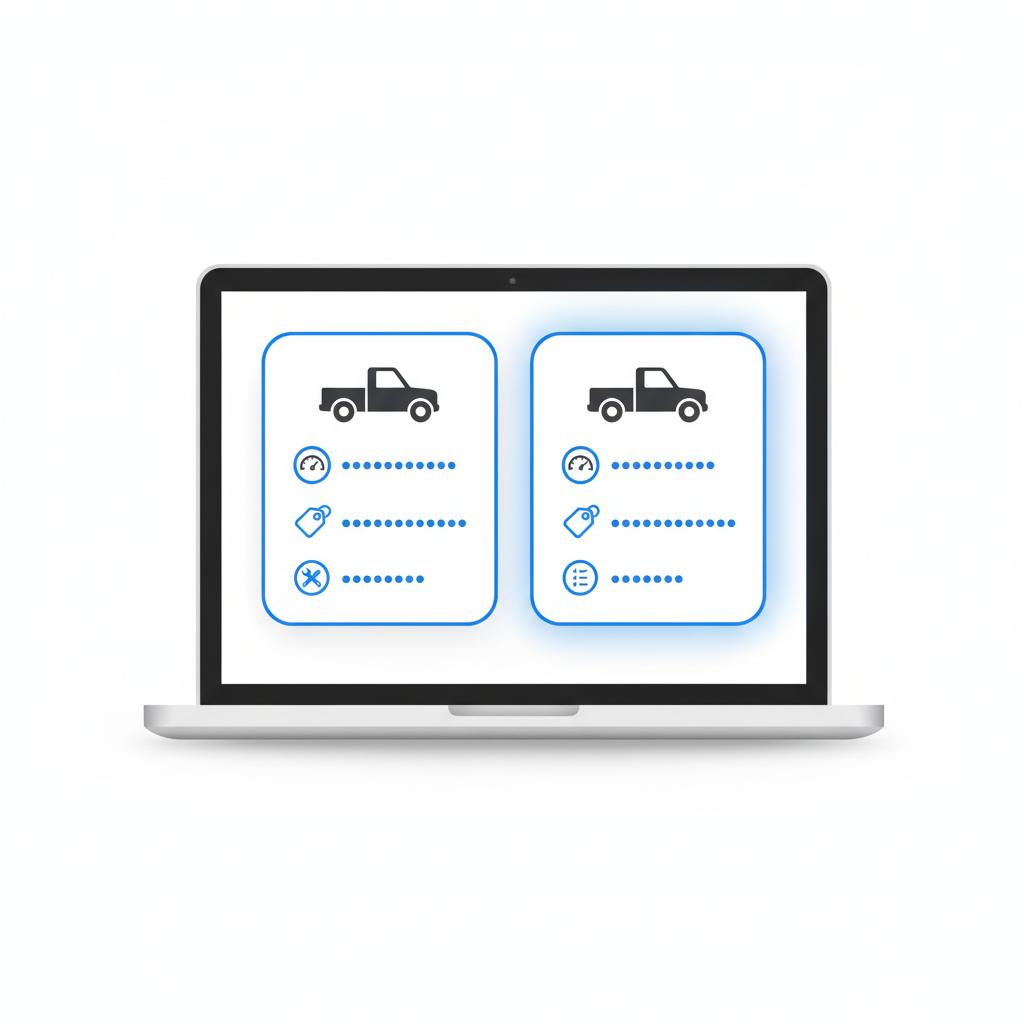
Price analysis labels help prioritize listings, but always confirm that the label aligns with the vehicle history report. A Good Deal label paired with incomplete service records should prompt further questions rather than immediate confidence.
When price and history conflict, weight documented maintenance and major service events more heavily than a lower asking price. A fair market price with strong records often gives more predictable ownership costs than a bargain with missing service history.
Step 3: search model-year specific complaints and maintenance records
Search owner-complaint databases and recall lists for the exact model year and powertrain. Some model years show concentrated complaints for components like transmissions or electrical systems. If a model-year cluster exists, factor the likelihood of major repairs into your offer and inspection plan RepairPal reliability pages.
Ask the seller for receipts and service invoices for major repairs such as transmission servicing, timing-chain or timing-belt work, and fuel-system service. These records can move a car from uncertain to acceptable in long-term value estimates.
Common failure points and buyer mistakes that shorten ownership life
Known component clusters for Chevy/GMC trucks and SUVs
Aggregated complaint data point to a few recurring areas that tend to create costly repairs when they fail, notably transmissions, fuel systems, and electrical components. These clusters show up in owner reports and platform-specific complaint summaries Silverado complaints summary.
Transmission problems often create large out-of-pocket repairs that shorten a vehicle's useful life if warranty coverage is absent or a thorough service history is missing. Fuel-system and electrical faults can also become expensive if left unresolved.

Buyers sometimes skip detailed service verification and accept a visual inspection alone. That mistake raises the chance that deferred maintenance or a hidden recurring fault will cause early, costly failures. Always use a full history report and, when possible, request a pre-purchase inspection from an independent technician.
Maintenance-neglect patterns that accelerate failure
Missed scheduled services such as fluid changes, transmission servicing, and timing-system inspections accelerate wear. For trucks that regularly tow or haul, check for heavy-duty maintenance history because towing increases stress on powertrain and brakes.
Model-year and powertrain choices matter because certain powertrain updates or downsized turbo engines carry different wear patterns. When possible, favor model years without known systemic complaints or with documented remediation campaigns by the manufacturer.
How price and resale signals change the calculus: using market context
What pricing signals tell you about remaining life
Price and resale patterns often reflect expected remaining life. When similar vehicles with comparable mileage and records trade at higher prices, a lower-priced listing may be priced down for known or suspected problems. Use local comparisons to spot those discrepancies Edmunds on resale and ownership cost.
Price analysis labels help prioritize listings, but always confirm that the label aligns with the vehicle history report. A Good Deal label paired with incomplete service records should prompt further questions rather than immediate confidence.
Assemble a short pool of 3 to 5 local peers with similar mileage, model year, and trim. Compare asking prices, price analysis labels, and history reports side by side. If one vehicle has a much stronger service history at a similar price, it is generally the safer choice.
Remember that total cost to own for a high-mileage purchase depends on expected repairs, insurance, and regional maintenance rates. Use price signals as a guide, not a decision rule, and confirm with a history report and inspection.
Imagine a 2014 Silverado with 210,000 miles and complete service records that show consistent oil and transmission servicing versus a 2016 Sierra with 150,000 miles but fragmentary service documentation. Mileage-based studies show that Silverado and Sierra family platforms often produce high-mileage trucks, but the service history is decisive for remaining life estimates iSeeCars long-mileage study. You can also read a Silverado longevity breakdown by generation Silverado longevity.
In this scenario, the documented service history on the higher-mileage Silverado may make it the less risky ownership choice, provided the records show timely transmission and cooling-system maintenance. If records are missing for either vehicle, that raises the importance of a pre-purchase inspection focused on known problem areas.
Compare service history, pricing, and complaints for two listings
Use as a side-by-side guide
Use the checklist above to organize the facts: place service receipts for each major item next to the comparable line for the other truck. That structured comparison shows where the mileage advantage is meaningful and where it is not.
Example 2: mid-size SUV comparison across model years
Consider two mid-size SUVs where one is an earlier model year with fewer owner complaints and strong service documentation, while a later model year has known transmission complaints in owner databases but cleaner mileage. Platform and model-year complaint clusters can flip the expected value between these two options, so search owner-complaint databases for both model years before making an offer RepairPal reliability pages. For broader GMC longevity context see a dealer writeup on what GMC cars often achieve in long-term ownership What GMC car is most likely to last 10+ years.
When a later-year vehicle shows clustered complaints for a component, factor likely repair costs into your offer. Conversely, an earlier year with proven servicing and no complaint clusters may represent lower near-term repair risk, even with higher mileage.
Final takeaways and next steps for buyers
Short checklist to use before visiting a dealer
Before you visit a dealership, run these checks: request or run a vehicle history report, review service records and ownership history, compare price analysis labels with local peers, and search model-year complaint databases for known clusters. These steps focus your inspection and negotiation on evidence rather than brand reputation Consumer Reports on Chevrolet.
CarFax Deals and similar decision-support tools surface risk signals such as title status, accident history, and price analysis labels. Use them to prioritize listings for deeper checks rather than as a substitute for an inspection or detailed service review.
Where to focus time and budget when choosing a high-mileage Chevy or GMC
Prioritize confirming transmission, fuel-system, and electrical history for trucks and larger SUVs, because aggregated complaint data show those components commonly cause costly interventions. If receipts back up major recent repairs, that can materially improve confidence in remaining life Silverado complaints summary.
Finally, match price to verified history. A fair market price with strong documentation is generally more predictable than a lower price that hides gaps in service history.
Brand matters less than model, year, and maintenance history. Chevrolet and GMC are often platform-shared, so check the specific vehicle history and service records to predict longevity.
Start with a vehicle history report for title and accident information, then review service records and search model-year complaint databases before arranging an inspection.
Yes. A high-mileage vehicle with complete, documented maintenance can be less risky than a lower-mileage car with gaps in service or known complaints.
References
- https://www.jdpower.com/business/press-releases/2024-us-vehicle-dependability-study-vds
- https://www.consumerreports.org/cars/chevrolet
- https://www.iseecars.com/longest-lasting-cars-study-2024
- https://repairpal.com/reliability
- https://www.carcomplaints.com/Chevrolet/Silverado_1500/
- https://www.jdpower.com/business/press-releases/2025-us-vehicle-dependability-study-vds
- https://www.huffineschevyplano.com/blog/2026/january/9/silverado-longevity-by-generation-and-model-year.htm
- https://www.phillipsbuickgmctruck.com/blogs/3625/what-gmc-car-is-most-likely-to-last-10-years
- https://www.edmunds.com/car-buying/how-long-do-cars-last.html
- https://carfaxdeals.com/run-report
- https://carfaxdeals.com/vinreport
- https://carfaxdeals.com/how-to-use